
Putting local agency at the core: System shifts for gender-responsive social protection
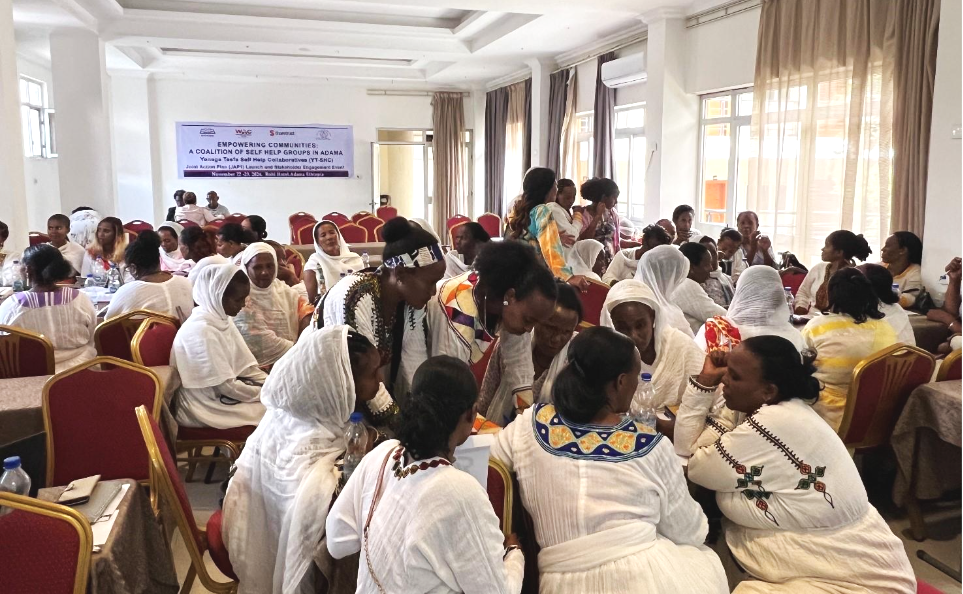
Social protection can be a game-changer; transforming lives by reducing vulnerability to shocks, combating social exclusion, and giving women and girls the tools to break the cycle of poverty. Yet, as chronic poverty becomes more difficult to alleviate, and crises become more frequent and protracted, a vital question emerges: who should be in the driving seat for more inclusive, effective, and responsive social protection?
The answer lies with local actors - from grassroots women’s collectives such as Self Help Groups to local NGOs, and subnational government actors. These actors not only fill critical delivery gaps but also have the potential to radically shift the framing and design of social protection systems – especially for women, people with disabilities, and other excluded groups.
Local Actors: Frontline Architects of Inclusion
A recent study led by The Share Trust through FCDO’s STAAR Facility explored the current and potential roles of diverse local actors. Spanning six countries (Afghanistan, Kenya, Lebanon, Myanmar, Nepal, and Sudan), it provides systematic evidence on the current and potential roles of local actors in gender-responsive and inclusive social protection, including in conflict contexts. The findings are clear: local actors are essential yet consistently underutilised.
In many fragile and conflict-affected contexts, national social protection systems have collapsed or are undermined by restrictive governance and political instability. In such settings, local actors are often the first responders, distributing emergency aid, registering excluded groups, conducting community awareness, and navigating complex political terrain. In Sudan, for instance, Emergency Response Rooms have become critical mutual aid hubs amid the civil war, mobilising food, shelter, and cash support where formal systems have failed.
But their roles go far beyond delivery of social protection benefits. From Lebanon to Myanmar, the research finds that local women’s organisations and organisations for persons with disabilities (OPDs) have challenged discriminatory policies, influenced targeting mechanisms, and pushed for more inclusive eligibility criteria; even where their agency is curtailed by restrictive social norms or de facto governments.
A Shift in Roles: From Implementers to Decision Makers
Despite their proven contributions, most local actors remain confined to operational roles. Survey findings from across the six countries show that international actors see themselves as “primarily responsible” for decision-making, while local actors are generally “consulted” or “omitted” in policy and programme framing and strategic design, including targeting and resource allocation.
Yet, when empowered, local actors can redefine what gender-responsive and inclusive social protection looks like:
In Myanmar, women-led CSOs conducted rapid needs assessments post-Cyclone Mocha, directly shaping programme objectives tailored to the unique challenges faced by women in the post-disaster context.
In Nepal, collective protests by women’s groups led to the reversal of discriminatory rules excluding widows and single women from accessing the social security allowance scheme, transforming national policy framing.
In Kenya, LNGOs co-designed targeting criteria with communities for cash transfers, ensuring the inclusion of informal workers and unpaid caregivers.
These examples underscore the value of shifting power and agency toward local actors, not only to improve programme outcomes, but to foster ownership, sustainability, and address deep rooted inequalities.
Crisis as Catalyst: Rethinking Gender, Inclusion, and Protection
Crisis contexts reveal both the necessity and opportunity of locally led action. The STAAR research finds that in these very contexts, gender-responsive and inclusive approaches are most at risk of being sidelined. Government restrictions and social norms can limit the ability of gender equality and social inclusion (GESI) actors, including OPDs and women’s organisations, to operate freely. For example in Myanmar and Afghanistan, these organisations were effectively excluded from programme design, monitoring, and evaluation. In these contexts, international actors typically step in, asserting leadership and reshaping the response architecture around external priorities and systems.
Yet it is precisely in these settings that local actors’ contextual expertise and local insights become critical. They know where the most marginalised populations are. They understand the cultural nuances that affect access.
The Way Forward: Unlocking the Potential of Local Leadership
The evidence is unambiguous: local actors – especially GESI-focused organisations – must be recognised as more than just delivery agents. They are the architects of equitable, inclusive, and sustainable social protection systems.
To harness their potential, the study recommends a series of systemic shifts:
Increase direct, flexible funding: move from short-term, project-based, intermediary-driven financing toward multi-year, unrestricted funding for local NGOs, CBOs, and representative organisations. This includes investing in informal mechanisms like women’s Self Help Groups to ensure greater autonomy and sustainability.
Institutionalise local co-leadership: integrate diverse local actors, including subnational government, into framing and design from the outset; not as consultees but as co-decision-makers. This involves creating formalised advisory bodies (e.g., girls advisory committees), harnessing GESI champions at all levels, and mandating local leadership clauses in donor agreements.
Strengthen capacity through peer exchange: invest in peer-to-peer learning, strengthen GESI competencies (e.g., gender analysis), expand access to digital tools, create hubs for capacity sharing, and facilitate south-south exchange.
Promote equitable governance, coordination and partnership: reduce the piecemeal involvement of local actors and parallel INGO systems by supporting cross-sectoral dialogues and mechanisms, broad-based coalitions of local actors to scale initiatives, and coordination across GESI actors.
Embed gender and social inclusion across the system: ensure that GESI actors play a central role in shaping eligibility and transfer modalities that reflect the intersecting vulnerabilities of diverse groups and conduct participatory monitoring and evaluation.
Shift power across programming processes: map the local actor ecosystem, assign roles according to comparative strengths and preferences of different local actors (separation of functions analysis), leverage community-led advocacy, and formalise informal grassroots feedback channels.
Redefine success in social protection: move beyond coverage and efficiency metrics to assess whether systems are transformative - do they shift power? Do they reach the hardest to reach? Do they address the root causes of exclusion?
Reimagining What Is Possible
As social protection systems evolves, we need to continually reflect on who is in the driving seat, who shapes key processes, and who benefits. Recognising and resourcing local actors – particularly women’s organisations and community-based organisations – as central architects rather than peripheral implementers is critical for more effective, equitable, inclusive, and sustainable social protection, especially in crisis contexts.
What’s needed now is for international actors to step back, transfer power and resources, and trust those closest to the challenge to lead the transformation.
For the full synthesis reports and policy briefs, please follow the link.
For more information on the study, please contact Sarah Selby – The Share Trust, Research and Learning Director (sarah@thesharetrust.org); or George Kamau – The Share Trust, Research Associate Director (george@thesharetrust.org)